
उर्स महबूब इलाही हज़रत निज़ामुद्दीन औलिया
उर्स महबूब इलाही हज़रत निज़ामुद्दीन औलिया इस्लामी (हिजरी) कैलेंडर की 17 रबीउस सानी को मनाया जाता है।
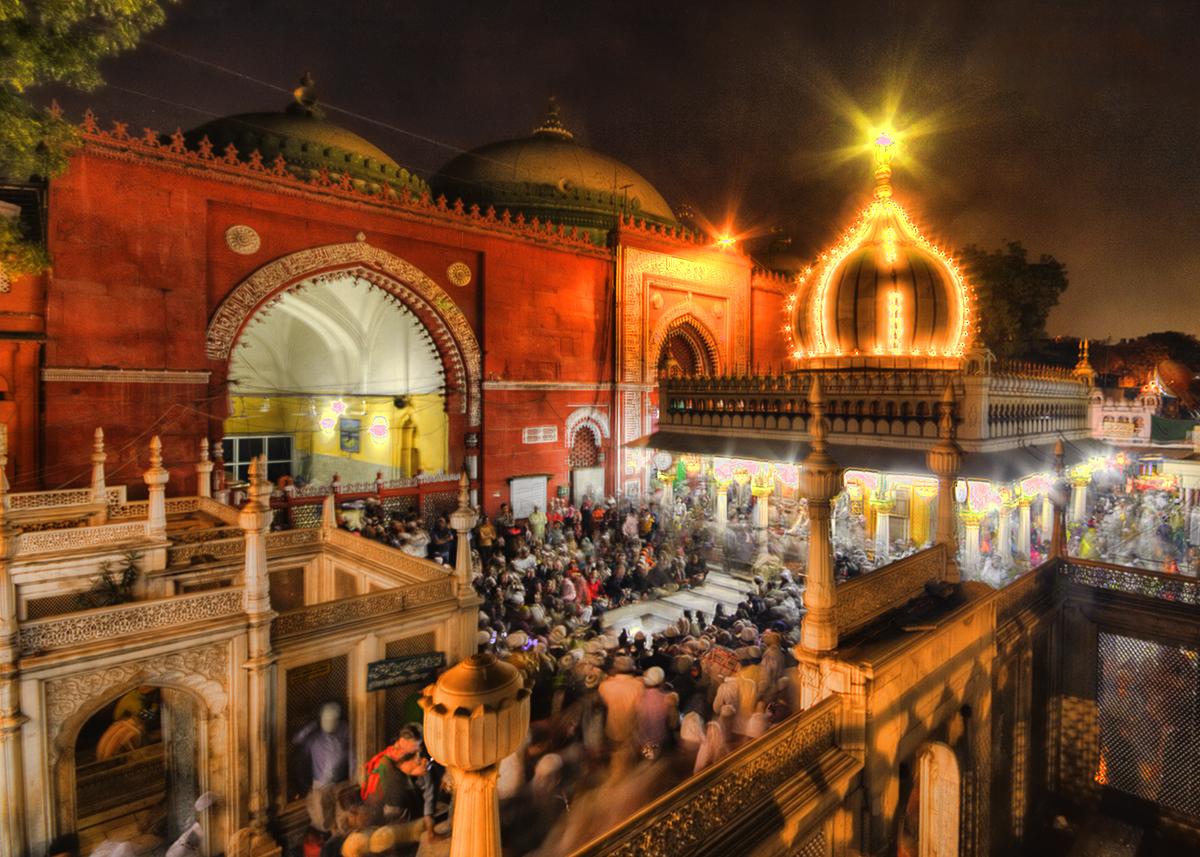
उर्स महबूब इलाही हज़रत निज़ामुद्दीन औलिया की तारीख़ें
| साल | सऊदी अरब (उम्म अल-क़ुरा) | भारत / पाकिस्तान / बांग्लादेश (अनुमानित) |
|---|---|---|
| 1447 हिजरी | गुरुवार, 9 अक्टूबर 2025 | 10 अक्टूबर 2025 |
| 1448 हिजरी | सोमवार, 28 सितंबर 2026 | 29 सितंबर 2026 |
| 1449 हिजरी | शनिवार, 18 सितंबर 2027 | 19 सितंबर 2027 |
| 1450 हिजरी | गुरुवार, 7 सितंबर 2028 | 8 सितंबर 2028 |
| 1451 हिजरी | सोमवार, 27 अगस्त 2029 | 28 अगस्त 2029 |
| 1452 हिजरी | शनिवार, 17 अगस्त 2030 | 18 अगस्त 2030 |
अंग्रेज़ी तारीख़ें हिसाब से निकाली गई हैं और आपके देश में चाँद दिखने के अनुसार एक दिन आगे-पीछे हो सकती हैं।
इस दिन का रिमाइंडर पाएं
मुफ़्त ऐप हर इस्लामी दिन से पहले आपको सूचना देता है।

Hazrat Nizamuddin Auliya R.H (636–725 AH / 1238–1325 CE), known as "Mahbub-e-Ilahi" (Beloved of God), was one of the greatest Sufi saints in the history of Islam and the most celebrated master of the Chishti order in India, whose spiritual influence shaped the religious and cultural life of the entire Indian subcontinent. He was born in Badaun, Uttar Pradesh, and lost his father at age 5. His mother, Bibi Zulekha, raised him in poverty but with deep faith — she would say: "We are guests of Allah" when they had no food, a phrase that shaped his lifelong trust in God.
He traveled to Ajodhan (modern Pakpattan, Pakistan) and became the devoted disciple of Hazrat Baba Fariduddin Ganj-i-Shakar R.H — the third great Chishti master after Gharib Nawaz R.H and Khawaja Qutbuddin Bakhtiyar Kaki R.H. He established his khanqah in Ghiyaspur (now Nizamuddin area, Delhi), which became the undisputed spiritual capital of India for nearly 50 years. His gatherings would attract thousands — from the poorest laborers to the highest nobles.
He lived through the reigns of seven Delhi Sultans but refused to visit any royal court, famously declaring: "My house has two doors — if the Sultan enters from one, I will leave from the other." When Sultan Ghiyasuddin Tughlaq threatened him before departing for Bengal, he calmly said: "Hunuz Dilli dur ast" (Delhi is still far away) — the Sultan died before reaching Delhi, fulfilling this prophetic statement. His most beloved disciple was Hazrat Amir Khusrau R.H (1253–1325 CE) — the father of Qawwali, inventor of the sitar and tabla, and pioneer of Urdu/Hindi poetry. Their bond of love is legendary — when Khusrau heard of his master's death, he gave away all his possessions and died of grief within months.
His teachings centered on love: "If a person places his trust in God, God will be enough for him" and "The love of God is the essence of all worship." His dargah in Nizamuddin, Delhi, remains one of the most visited shrines in India — the evening Qawwali sessions in its courtyard are a living 700-year tradition that draws visitors from across the world. Nearby lie Amir Khusrau and the Mughal princess Jahanara, who chose to be buried near this beloved saint. His annual Urs on the 17th of Rabi al-Thani draws hundreds of thousands to Delhi, observed with Qawwali, Sama, Fatiha, langar, and the famous "Phool Walon ki Sair" flower offering ceremony that celebrates his universal message of divine love.