
Urs of Ameer Kabeer Meer Syed Ali Hamdani Shah Hamdan
Urs of Ameer Kabeer Meer Syed Ali Hamdani Shah Hamdan is observed on 6 Dhu al-Hijjah of the Islamic (Hijri) calendar.
Urs of Ameer Kabeer Meer Syed Ali Hamdani Shah Hamdan dates
| Year | Saudi Arabia (Umm al-Qura) | India / Pakistan / Bangladesh (expected) |
|---|---|---|
| 1446 AH | Monday, 2 June 2025 | 3 June 2025 |
| 1447 AH | Saturday, 23 May 2026 | 24 May 2026 |
| 1448 AH | Wednesday, 12 May 2027 | 13 May 2027 |
| 1449 AH | Monday, 1 May 2028 | 2 May 2028 |
| 1450 AH | Friday, 20 April 2029 | 21 April 2029 |
| 1451 AH | Tuesday, 9 April 2030 | 10 April 2030 |
Gregorian dates are calculated and may change by a day depending on the moon sighting in your country.
Get a reminder for this event
The free app notifies you before every Islamic event.

Hazrat Meer Syed Ali Hamdani R.H (714–786 AH / 1314–1384 CE), known as "Shah-e-Hamdan" (King of Hamadan) and "Ameer-e-Kabeer" (the Great Commander), was the single most influential figure in the Islamization of Kashmir — the man who transformed the valley from a predominantly Hindu/Buddhist region into a Muslim-majority land through peaceful spiritual influence, scholarship, and economic development. He was born in Hamadan, Persia (modern Iran), into a distinguished Sayyid family tracing descent from Hazrat Imam Hussain R.A. He received his education from the greatest scholars of Persia and was initiated into multiple Sufi orders, becoming a master of the Kubrawiyya tradition.
He traveled to Kashmir three times, and on his second visit brought with him 700 Sayyid scholars, craftsmen, and artisans from Persia — a deliberate strategy to transform Kashmir not just spiritually but economically and culturally. These 700 Sayyids introduced numerous crafts and industries that became the backbone of Kashmiri economy for centuries: carpet weaving (the famous Kashmiri carpets), Pashmina shawl making, papier-mâché art, wood carving, silk weaving, and paper manufacturing — industries that still define Kashmir's economy today. His influence on Sultan Qutbuddin of Kashmir led to the implementation of Islamic law and the establishment of mosques and madrasas across the valley.
His approach combined spiritual attraction with practical economic upliftment — showing that Islam brings both spiritual and material prosperity. His most famous work "Zakhirat al-Muluk" (Treasury of Kings) is a comprehensive guide on Islamic governance covering the duties of rulers, the rights of subjects, economic justice, and ethical leadership — a text that influenced Kashmiri governance for centuries. He authored over 100 works in Arabic and Persian.
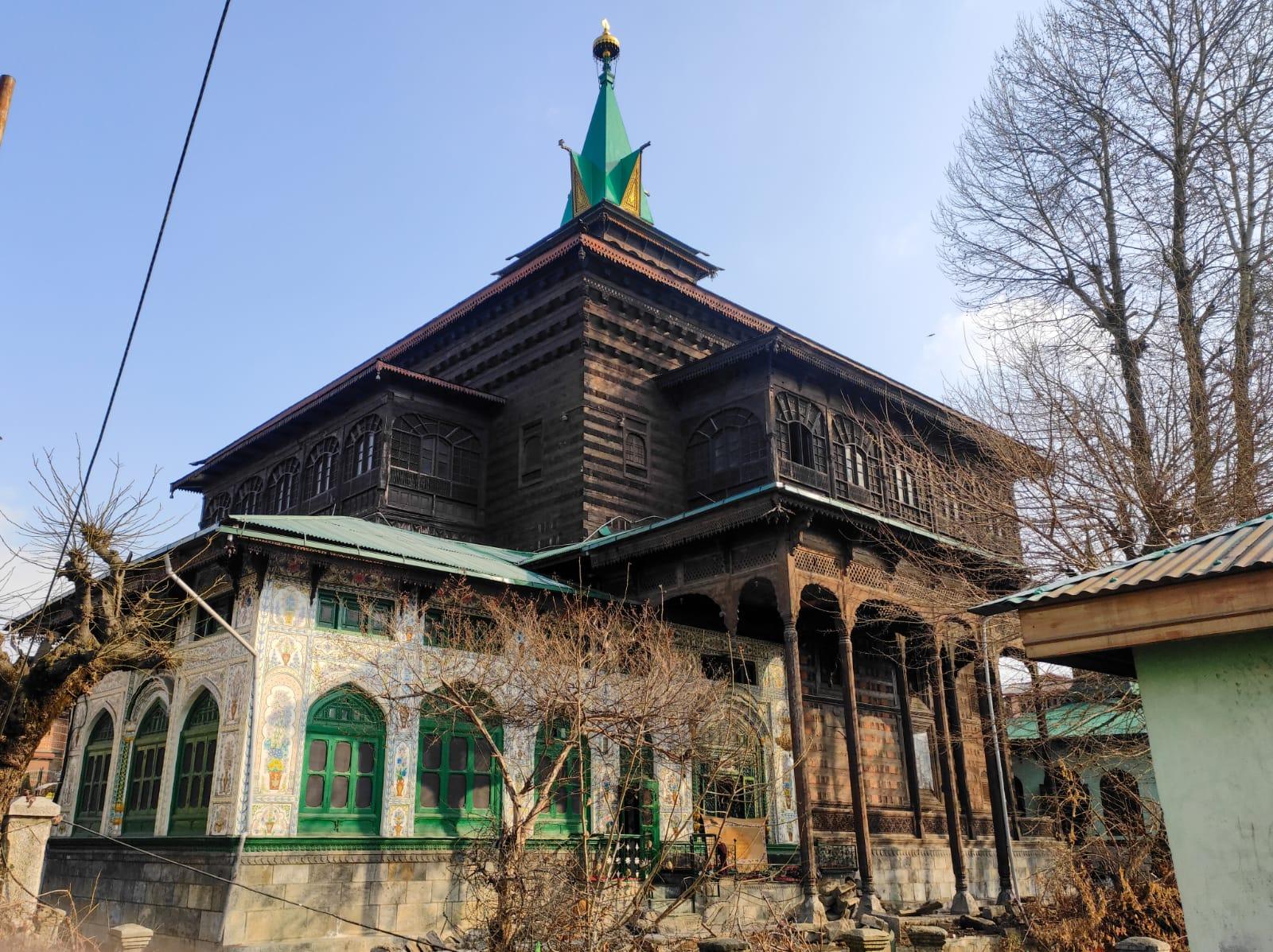
Among his karamaat, it is narrated that when he first entered the Kashmir Valley, the idol in the famous Kali temple cracked spontaneously — the priests were so shaken that many accepted Islam immediately. His shrine — the Khanqah-e-Moula — on the banks of the Jhelum River in Srinagar is one of the oldest and most beautiful mosques in Kashmir, built in distinctive Kashmiri wooden architecture. His annual Urs on the 6th of Dhu al-Hijjah is the most important religious gathering in Kashmir, drawing devotees from across the valley who honor the man who gave them both their faith and their livelihood.