
Urs of Mufti Azam Odisha Syed Abdul Quddus
Urs of Mufti Azam Odisha Syed Abdul Quddus is observed on 4 Rabi' al-Awwal of the Islamic (Hijri) calendar.
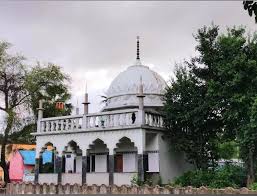
Urs of Mufti Azam Odisha Syed Abdul Quddus dates
| Year | Saudi Arabia (Umm al-Qura) | India / Pakistan / Bangladesh (expected) |
|---|---|---|
| 1447 AH | Wednesday, 27 August 2025 | 28 August 2025 |
| 1448 AH | Monday, 17 August 2026 | 18 August 2026 |
| 1449 AH | Friday, 6 August 2027 | 7 August 2027 |
| 1450 AH | Wednesday, 26 July 2028 | 27 July 2028 |
| 1451 AH | Monday, 16 July 2029 | 17 July 2029 |
| 1452 AH | Friday, 5 July 2030 | 6 July 2030 |
Gregorian dates are calculated and may change by a day depending on the moon sighting in your country.
Get a reminder for this event
The free app notifies you before every Islamic event.

Hazrat Syed Abdul Quddus R.H, honored with the title "Mufti-e-Azam Odisha" (Grand Mufti of Odisha), was the foremost religious authority and leading jurist of the Muslim community in Odisha (formerly Orissa), eastern India — a state where Muslims form a minority but have a rich heritage dating back to Arab traders who settled along the coast centuries ago. He belonged to the noble Sayyid lineage, tracing his ancestry to the blessed household of Prophet Muhammad ﷺ, and his name "Abdul Quddus" (Servant of the Most Holy) reflected his lifelong devotion to the sacred sciences of Islam. He received his education at leading Sunni institutions where he mastered Hanafi Fiqh, Hadith, Usul al-Fiqh, and Arabic — returning to Odisha with a mission to serve a community that had limited access to qualified Islamic scholars.
The title "Mufti-e-Azam Odisha" was conferred upon him by the Ulama in recognition of his position as the sole authority capable of issuing comprehensive fatwas for the entire Muslim population of the state — a responsibility he bore with scholarly precision and pastoral compassion for decades. He established a Dar-ul-Ifta that served Muslims across Odisha, addressing questions on worship, family law, business transactions, and the unique challenges faced by Muslims living as a minority in a predominantly Hindu state. He was particularly concerned with Islamic education — he established maktabs and madrasas in areas where Muslim children had no access to Quran education, personally traveling to remote districts to ensure no community was left without a teacher.
Among his contributions, he authored several treatises in Urdu and Odia addressing common misconceptions about Islam and clarifying matters of faith for both Muslims and their non-Muslim neighbors, promoting understanding and harmony. He was known for his interfaith dialogue — he maintained respectful relationships with Hindu and Christian leaders while firmly upholding Islamic principles, earning the respect of all communities in Odisha. His annual Urs on the 4th of Rabi al-Awwal is observed with scholarly gatherings, Fatiha, Quran Khwani, and Naat recitals by the Muslim community of Odisha who honor this great scholar who served them as their spiritual and legal guide.