
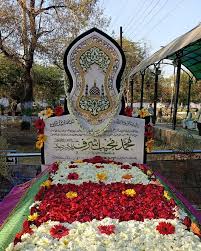
विसाल अशरफ अल-फुकहा मुफ्ती मुजीब अशरफ नागपुर
विसाल अशरफ अल-फुकहा मुफ्ती मुजीब अशरफ नागपुर इस्लामी (हिजरी) कैलेंडर की 15 ज़िल हिज्जा को मनाया जाता है।
विसाल अशरफ अल-फुकहा मुफ्ती मुजीब अशरफ नागपुर की तारीख़ें
| साल | सऊदी अरब (उम्म अल-क़ुरा) | भारत / पाकिस्तान / बांग्लादेश (अनुमानित) |
|---|---|---|
| 1446 हिजरी | बुधवार, 11 जून 2025 | 12 जून 2025 |
| 1447 हिजरी | सोमवार, 1 जून 2026 | 2 जून 2026 |
| 1448 हिजरी | शुक्रवार, 21 मई 2027 | 22 मई 2027 |
| 1449 हिजरी | बुधवार, 10 मई 2028 | 11 मई 2028 |
| 1450 हिजरी | रविवार, 29 अप्रैल 2029 | 30 अप्रैल 2029 |
| 1451 हिजरी | गुरुवार, 18 अप्रैल 2030 | 19 अप्रैल 2030 |
अंग्रेज़ी तारीख़ें हिसाब से निकाली गई हैं और आपके देश में चाँद दिखने के अनुसार एक दिन आगे-पीछे हो सकती हैं।
इस दिन का रिमाइंडर पाएं
मुफ़्त ऐप हर इस्लामी दिन से पहले आपको सूचना देता है।

Hazrat Mufti Mujeeb Ashraf R.H, honored with the title "Ashraf-ul-Fuqaha" (Most Noble of the Jurists), was the foremost Mufti and leading religious authority of the Ahl-e-Sunnat tradition in Nagpur, Maharashtra — the geographic center of India and the capital of the Vidarbha region, home to a significant Muslim community that has maintained its Islamic identity since the Mughal and Nizam periods. His title "Ashraf-ul-Fuqaha" was conferred by the senior Ulama in recognition of his mastery over Islamic jurisprudence that placed him above all other jurists of his region — "Ashraf" (most noble) indicating the highest rank among the Fuqaha (jurists). He received his education at leading Sunni institutions where he specialized in Hanafi Fiqh, studying the classical texts including Hidaya, Kanz al-Daqaiq, Shami, and Fatawa-e-Razawiyyah under accomplished Muftis who granted him ijazah to issue fatwas independently.
He served as the primary religious authority for the Muslim community of the entire Vidarbha region (comprising Nagpur, Amravati, Akola, Wardha, Chandrapur, and surrounding districts), issuing thousands of fatwas that guided hundreds of thousands of Muslims in their daily religious practice. His fatwa methodology was notable for addressing the unique challenges faced by Muslims in central India — questions about working in mixed environments, dealing with Hindu festivals in the workplace, and maintaining Islamic practice in areas where Muslims are a small minority required nuanced scholarly judgment. He established a Dar-ul-Ifta in Nagpur that became the reference point for all religious queries from the Vidarbha region, and his rulings were sought by Muftis in other cities who faced similar minority-context questions.
He played a crucial role in establishing madrasas and Islamic schools across the Vidarbha region, personally traveling to remote areas to ensure Muslim children had access to Quran education. He authored several works on Fiqh addressing contemporary issues specific to the Indian Muslim experience that continue to be referenced by scholars. His Wisaal on the 15th of Dhu al-Hijjah is commemorated with Fatiha, scholarly conferences, and Quran Khwani by his students and the Muslim community of Vidarbha who honor this noble jurist who served them for decades.