
Urs of Khawaja Sufi Islam-ul-Haq, Narial Wadi
Urs of Khawaja Sufi Islam-ul-Haq, Narial Wadi is observed on 26 Rabi' al-Awwal of the Islamic (Hijri) calendar.
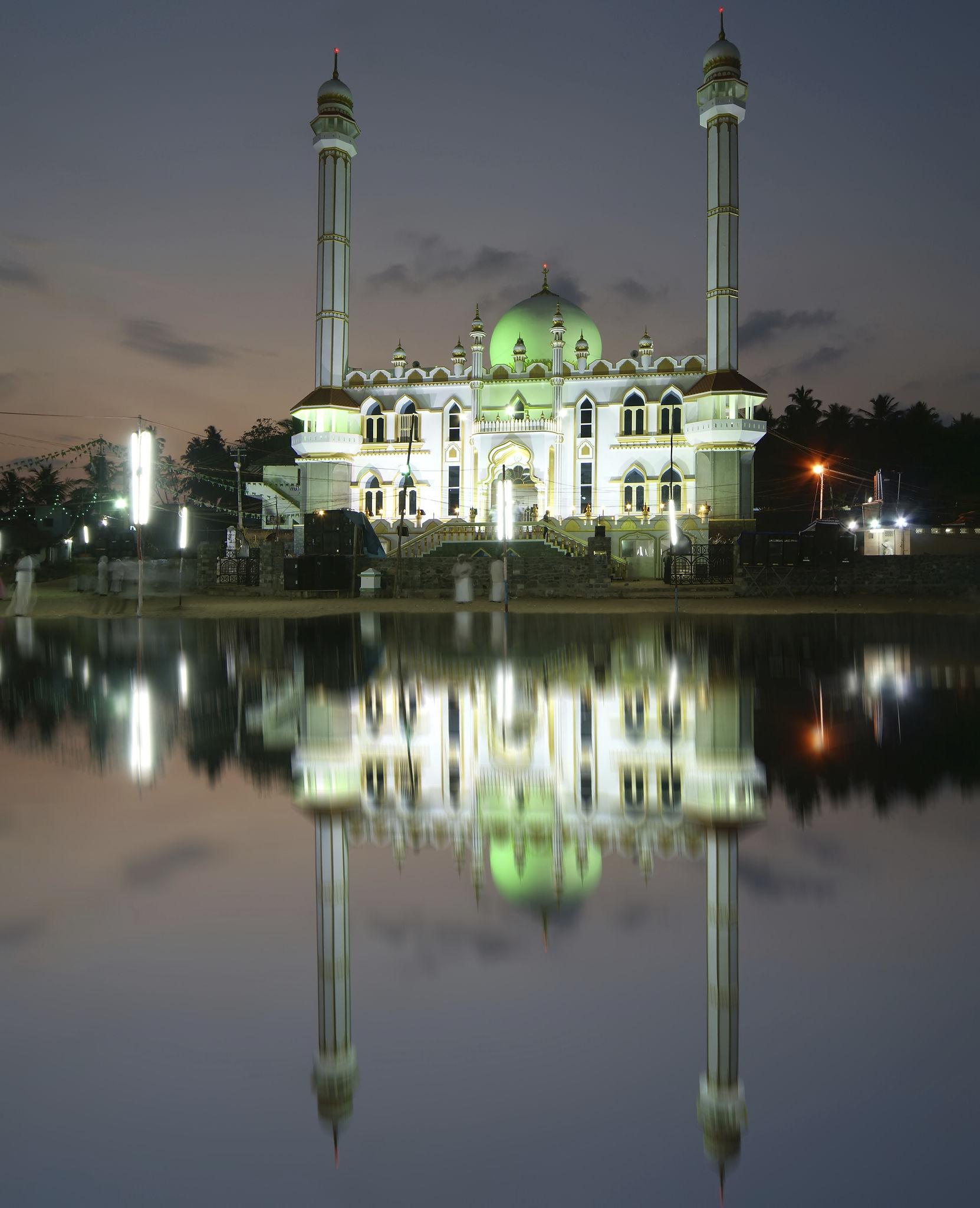
Urs of Khawaja Sufi Islam-ul-Haq, Narial Wadi dates
| Year | Saudi Arabia (Umm al-Qura) | India / Pakistan / Bangladesh (expected) |
|---|---|---|
| 1447 AH | Thursday, 18 September 2025 | 19 September 2025 |
| 1448 AH | Tuesday, 8 September 2026 | 9 September 2026 |
| 1449 AH | Saturday, 28 August 2027 | 29 August 2027 |
| 1450 AH | Thursday, 17 August 2028 | 18 August 2028 |
| 1451 AH | Tuesday, 7 August 2029 | 8 August 2029 |
| 1452 AH | Saturday, 27 July 2030 | 28 July 2030 |
Gregorian dates are calculated and may change by a day depending on the moon sighting in your country.
Get a reminder for this event
The free app notifies you before every Islamic event.

Hazrat Khawaja Sufi Islam Ul Haq R.H was a distinguished Sufi saint of the Ahl-e-Sunnat tradition based in Narial Wadi (Coconut Grove) — a locality whose very name evokes the lush coastal landscape of western India where this saint established his spiritual center and served the Muslim community for decades. His name "Islam Ul Haq" (Islam of Truth) reflected his mission — he was dedicated to presenting authentic Islam in its true form, free from innovations and deviations, while maintaining the spiritual depth of the Sufi tradition. The title "Khawaja" connects him to the Chishti spiritual tradition, where this honorific is used for masters of the order, linking him to the chain of Khawaja Gharib Nawaz R.H and the great Chishti saints of India.
He received his spiritual training from authorized masters and underwent the rigorous disciplines of the Sufi path before being granted khilafat to guide seekers independently toward Allah SWT. Among his karamaat, it is narrated that a family facing severe financial ruin came to him in desperation. He instructed them to give charity from whatever little they had left — though it seemed counterintuitive, they obeyed.
Within days, unexpected opportunities opened for them and their situation reversed completely. His khanqah in Narial Wadi became a center of Islamic learning and spiritual practice where people from all walks of life — fishermen, traders, laborers, and scholars — would gather for Dhikr, Quran recitation, and spiritual counsel. He was particularly known for his Friday gatherings where he would deliver powerful lectures combining scholarly knowledge with spiritual wisdom, making complex Islamic teachings accessible to the common people of his coastal community.
He emphasized that true Sufism is service — he would personally visit the sick, comfort the bereaved, and ensure that no family in his area went hungry. His annual Urs on the 26th of Rabi al-Awwal is celebrated with Quran Khwani, Naat recitals, Fatiha, and langar distribution where devotees gather to honor this servant of truth and seek his spiritual blessings.