
Wisaal of Moulana Naqi Ali Khan
Wisaal of Moulana Naqi Ali Khan is observed on 29 Dhu al-Qi'dah of the Islamic (Hijri) calendar.
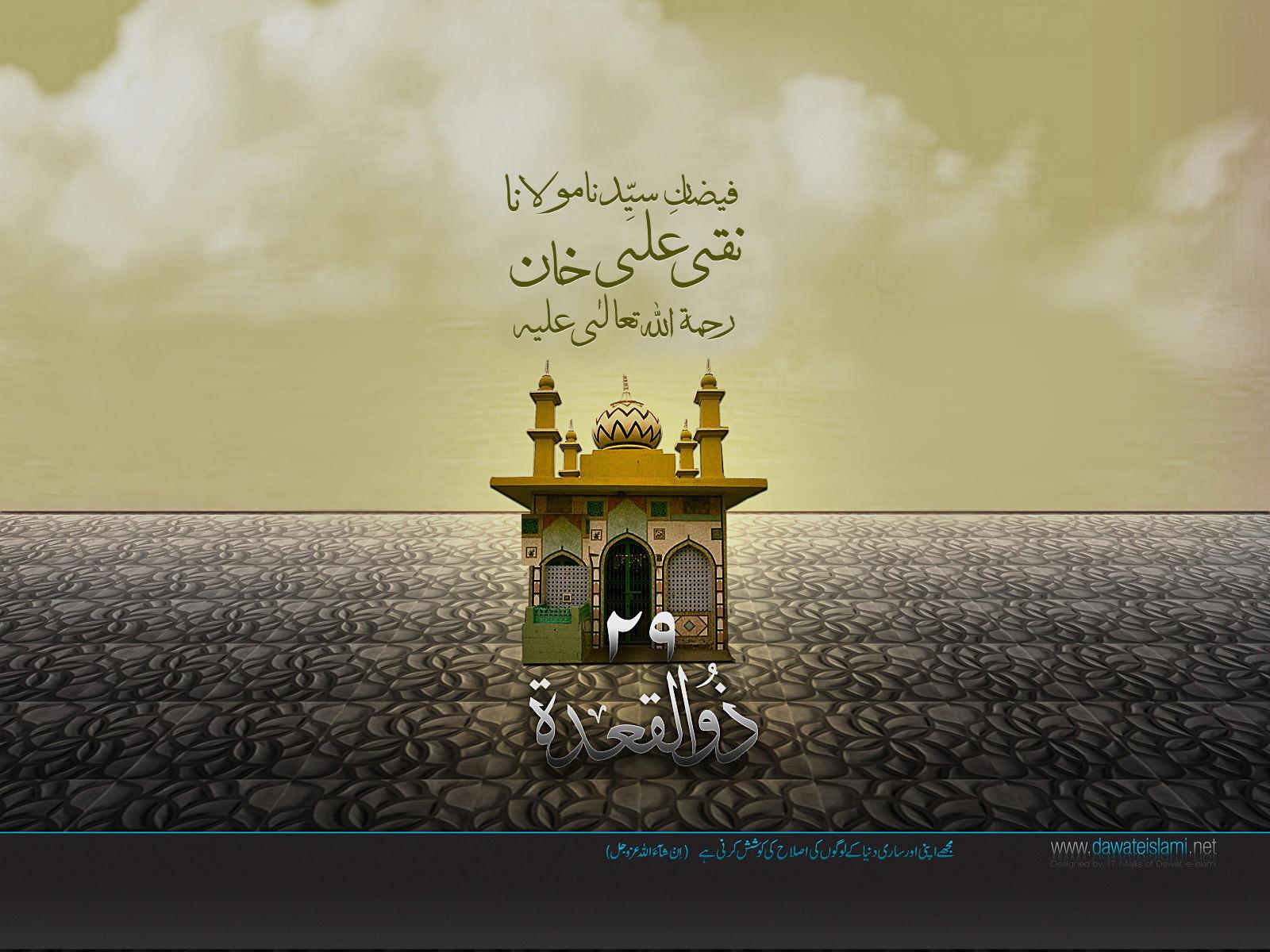
Wisaal of Moulana Naqi Ali Khan dates
| Year | Saudi Arabia (Umm al-Qura) | India / Pakistan / Bangladesh (expected) |
|---|---|---|
| 1446 AH | Tuesday, 27 May 2025 | 28 May 2025 |
| 1447 AH | Saturday, 16 May 2026 | 17 May 2026 |
| 1448 AH | Thursday, 6 May 2027 | 7 May 2027 |
| 1449 AH | Monday, 24 April 2028 | 25 April 2028 |
| 1450 AH | Friday, 13 April 2029 | 14 April 2029 |
| 1451 AH | Tuesday, 2 April 2030 | 3 April 2030 |
Gregorian dates are calculated and may change by a day depending on the moon sighting in your country.
Get a reminder for this event
The free app notifies you before every Islamic event.

Hazrat Moulana Naqi Ali Khan R.H (1246–1297 AH / 1831–1880 CE) was the father of Aala Hazrat Imam Ahmed Raza Khan R.H — the Mujaddid of the 14th Islamic century — and was himself a distinguished scholar, jurist, and author of Bareilly Shareef whose own scholarly achievements would be considered remarkable even without his famous son. He belonged to the Pathan (Pashtun) scholarly family of Bareilly that had migrated from Kandahar, Afghanistan, to India during the Mughal era. His grandfather Hazrat Moulana Raza Ali Khan R.H and father Hazrat Moulana Muhammad R.H were both accomplished scholars, establishing a dynasty of learning that would reach its zenith in his son.
He received his education from the leading scholars of his era and was recognized as a Mufti qualified to issue fatwas — he authored several works on Fiqh and Aqeedah that demonstrated his independent scholarly caliber. His most significant contribution to Islamic history was recognizing and nurturing the extraordinary genius of his son Ahmed Raza from earliest childhood. When young Ahmed Raza delivered his first scholarly lecture at age 6 and issued his first fatwa at age 13, it was Moulana Naqi Ali Khan who had created the environment and provided the guidance that made such precocity possible.
He personally supervised his son's education, arranging for the best available teachers and providing access to the family's extensive library of classical Arabic and Persian texts — an investment that would produce the greatest Sunni scholar of the modern era. He was known for his strict adherence to the Sunnah in every detail of life — a quality he transmitted to his son, who would later become famous for his meticulous observance of every Prophetic practice. He passed away in 1297 AH / 1880 CE when Aala Hazrat was only 24 years old — yet by that time he had already laid the complete foundation for his son's future greatness, having instilled in him the love of knowledge, the love of the Prophet ﷺ, and the courage to defend the truth regardless of opposition.
His Wisaal on the 29th of Dhu al-Qi'dah is commemorated in Bareilly Shareef with Fatiha, Quran Khwani, and scholarly gatherings honoring the man who gave the world the Mujaddid of the 14th century.