
Urs of Azam Millat Makhdoom Gujrat Syed Azeemuddin Mahmood Noorullah
Urs of Azam Millat Makhdoom Gujrat Syed Azeemuddin Mahmood Noorullah is observed on 14 Shawwal of the Islamic (Hijri) calendar.
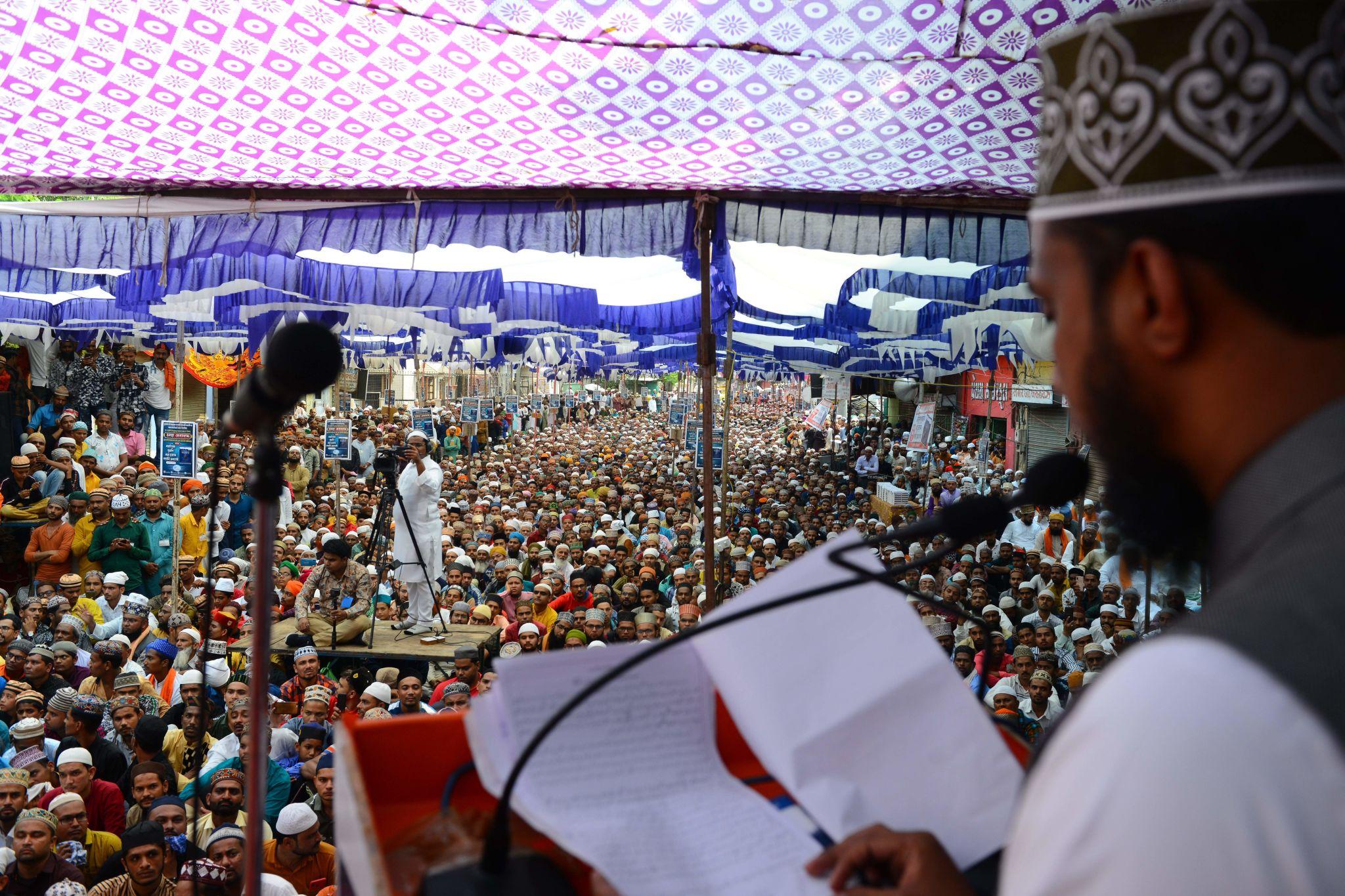
Urs of Azam Millat Makhdoom Gujrat Syed Azeemuddin Mahmood Noorullah dates
| Year | Saudi Arabia (Umm al-Qura) | India / Pakistan / Bangladesh (expected) |
|---|---|---|
| 1446 AH | Saturday, 12 April 2025 | 13 April 2025 |
| 1447 AH | Thursday, 2 April 2026 | 3 April 2026 |
| 1448 AH | Monday, 22 March 2027 | 23 March 2027 |
| 1449 AH | Friday, 10 March 2028 | 11 March 2028 |
| 1450 AH | Tuesday, 27 February 2029 | 28 February 2029 |
| 1451 AH | Sunday, 17 February 2030 | 18 February 2030 |
Gregorian dates are calculated and may change by a day depending on the moon sighting in your country.
Get a reminder for this event
The free app notifies you before every Islamic event.

Hazrat Syed Azeemuddin Mahmood Noorullah R.H, honored with the dual titles "Azam-e- Millat" (Pride of the Community) and "Maqdoom-e-Gujarat" (Spiritual Master of Gujarat), was the foremost spiritual leader and guiding light of the Muslim community of Gujarat — India's westernmost state with a Muslim population of over 6 million, concentrated in cities like Ahmedabad, Surat, Vadodara, and Bharuch. His title "Maqdoom" (one who is served/revered) is historically reserved for the highest-ranking saints — and being called Maqdoom of an entire state indicates his supreme spiritual authority over all of Gujarat's Muslim community. He belonged to the noble Sayyid lineage and his name "Noorullah" (Light of Allah) reflected his spiritual reality — devotees would describe his gatherings as being bathed in a palpable sense of divine light and peace.
He received his education from accomplished scholars and was initiated into a Sufi order, receiving complete khilafat that authorized him to guide seekers across the entire state of Gujarat — a responsibility he fulfilled for decades. Among his karamaat, it is narrated that during the devastating Gujarat earthquake of 2001 that killed over 20,000 people, the areas where his devoted followers lived suffered remarkably less damage — devotees attributed this protection to his spiritual blessings and his constant dua for the safety of his community. He established and patronized numerous Islamic institutions across Gujarat — madrasas in Ahmedabad, maktabs in Surat, and Islamic centers in smaller towns — ensuring that even remote Muslim communities had access to authentic Islamic education.
He was known for his annual Milad-un-Nabi ﷺ gatherings in Gujarat that would draw tens of thousands — the largest Sunni gatherings in the state, featuring scholars from across India and creating a powerful sense of community identity. He played a crucial role in maintaining communal harmony in Gujarat — a state with a complex history of Hindu-Muslim relations — using his influence to promote peace and understanding while firmly upholding Islamic principles. His annual Urs on the 14th of Shawwal is observed across Gujarat with scholarly conferences, Quran Khwani, Fatiha, and Naat gatherings that honor this pride of the community and spiritual master of Gujarat.